Navigating the world of derivatives can be daunting for working professionals. With multiple segments and complex strategies, finding a clear path to exam success and practical application is essential. This guide breaks down the core NISM derivative workbooks and explores critical hedging strategies used by fund managers to protect portfolio value.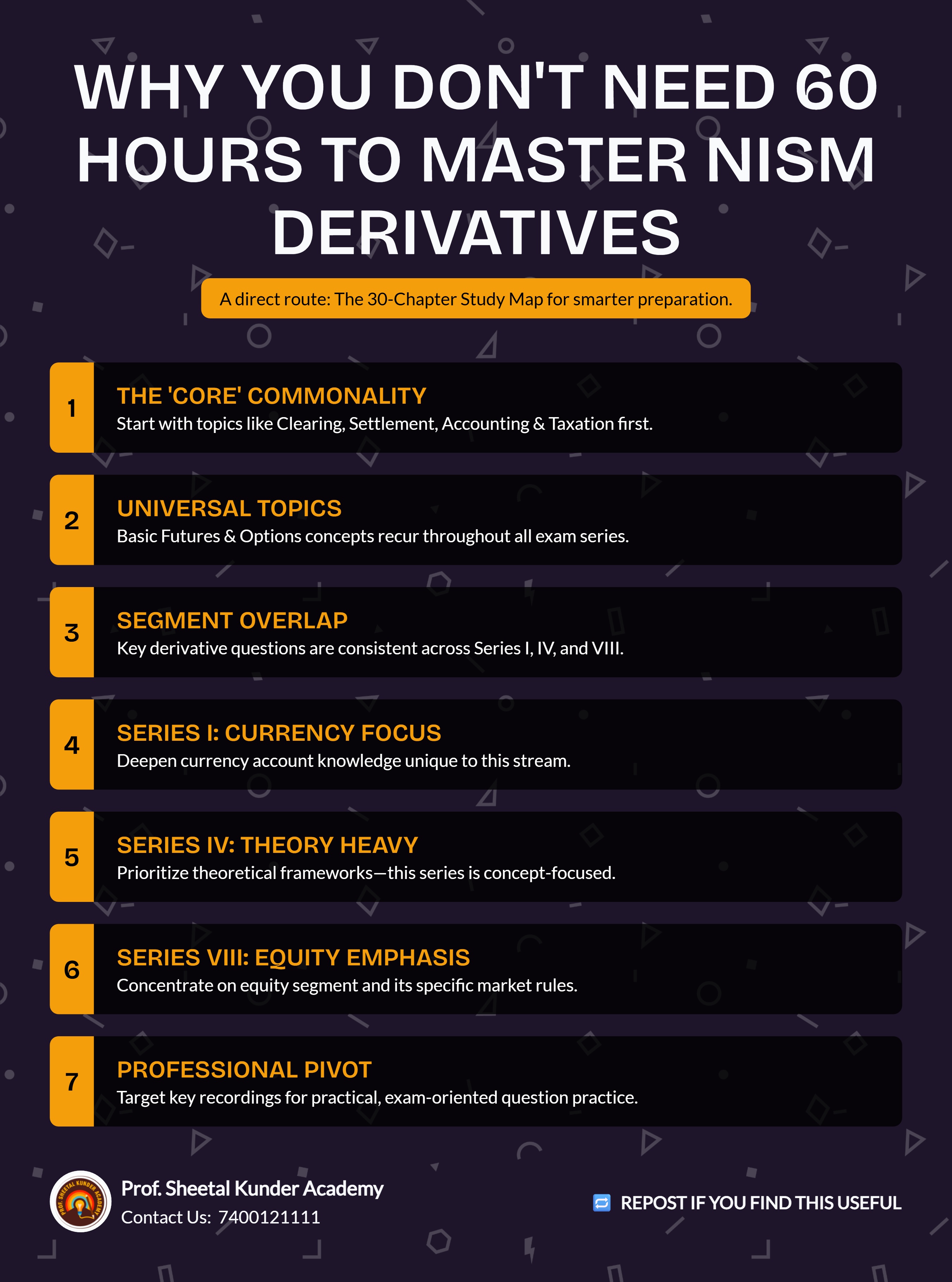
Understanding the Derivative Workbooks
The NISM curriculum is structured across three primary workbooks, each catering to a specific market segment:
- Series I: Currency Derivatives – Focused on the exchange-rate market.
- Series IV: Interest Rate Derivatives (IRD) – Primarily theoretical in nature, covering bond markets and interest fluctuations.
- Series VIII: Equity Derivatives – Concentrated on the stock market.
While individual segments exist, many concepts are universal. Topics such as
Clearing and Settlement,
Accounting and Taxation, and the basics of
Futures and Options remain consistent across all three workbooks
.
Tactical Hedging: Protecting a Mutual Fund Portfolio
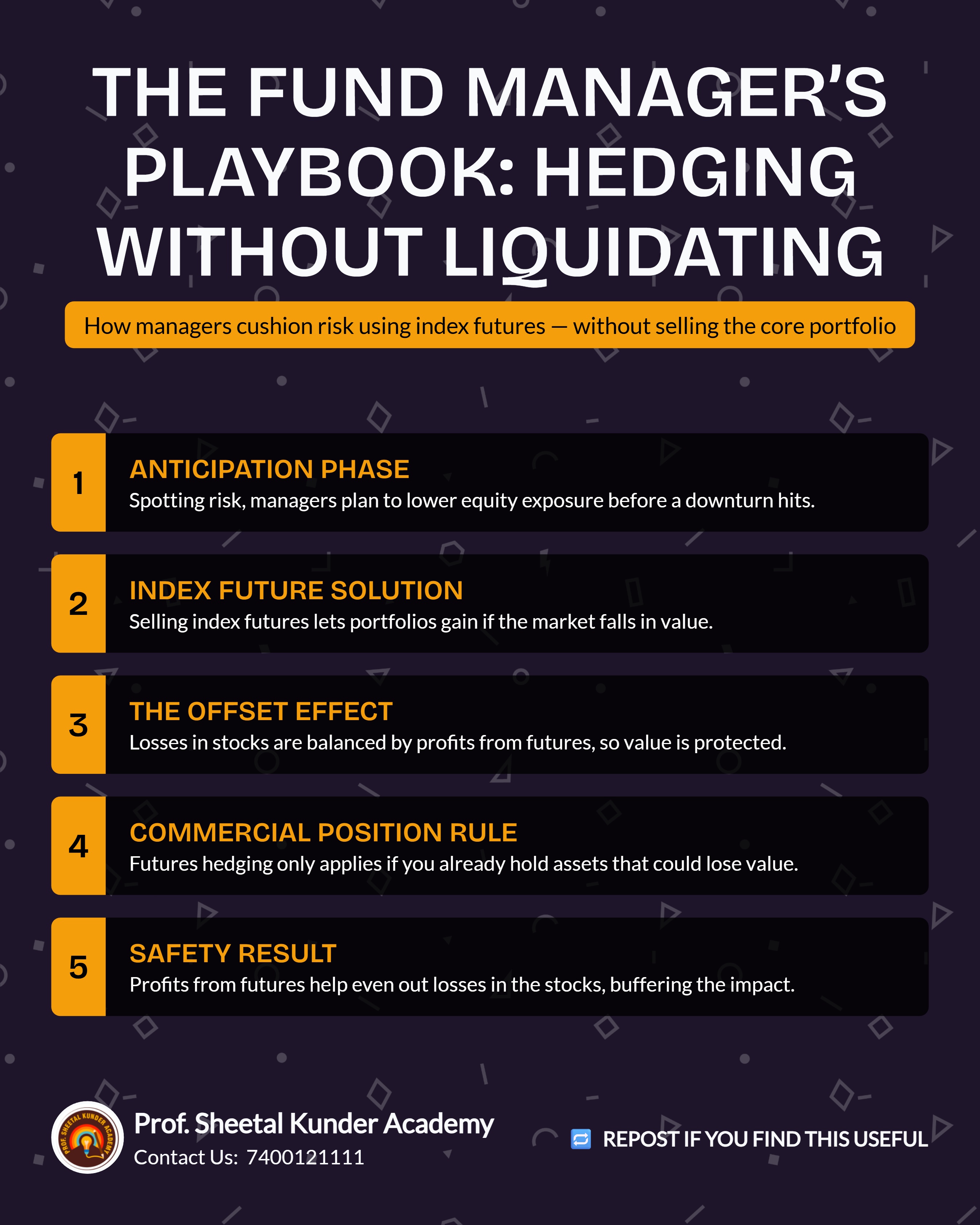
A common scenario in the derivatives market involves a mutual fund manager anticipating a market downturn. If a manager expects a bearish trend and wants to reduce equity exposure (e.g., from 50% down to 40%) without liquidating actual stock holdings, they can use Index Futures.
How the Hedge Works:
- The Risk: If the market turns bearish, the value of the portfolio's stocks will decline.
- The Solution: The fund manager can sell Index Futures.
- The Result: If the market falls, the loss in the physical stock portfolio is offset (nullified) by the profit made in the short (sold) futures position. This effectively preserves the portfolio's value from price fluctuations.
The Definition of a Hedge Transaction
In the world of risk management, a transaction in the futures market is officially classified as hedging only if it meets specific criteria:
- Commercial Position: There must be an existing related commercial position (like owning actual stocks).
- Risk Exposure: That position must already be exposed to the risk of loss due to price movements.
Essentially, the future transaction acts as a safety net. Even if you lose money in your primary business due to price fluctuations, the profit from your futures position helps manage that risk and stabilise your financial standing
.


 Launch your Graphy