Cracking the "Case Study" Code: 5 Tactical Lessons from the Frontlines of NISM XV

Sat Feb 7, 2026

The update to the NISM Series XV Research Analyst exam in early 2026 has sent a ripple of anxiety through the candidate community. The primary culprit? A revamped structure that places a heavy emphasis on Case Studies and Numericals. As Prof. Sheetal Kunder notes, the exam has shifted from a purely theoretical assessment to a rigorous test of application.

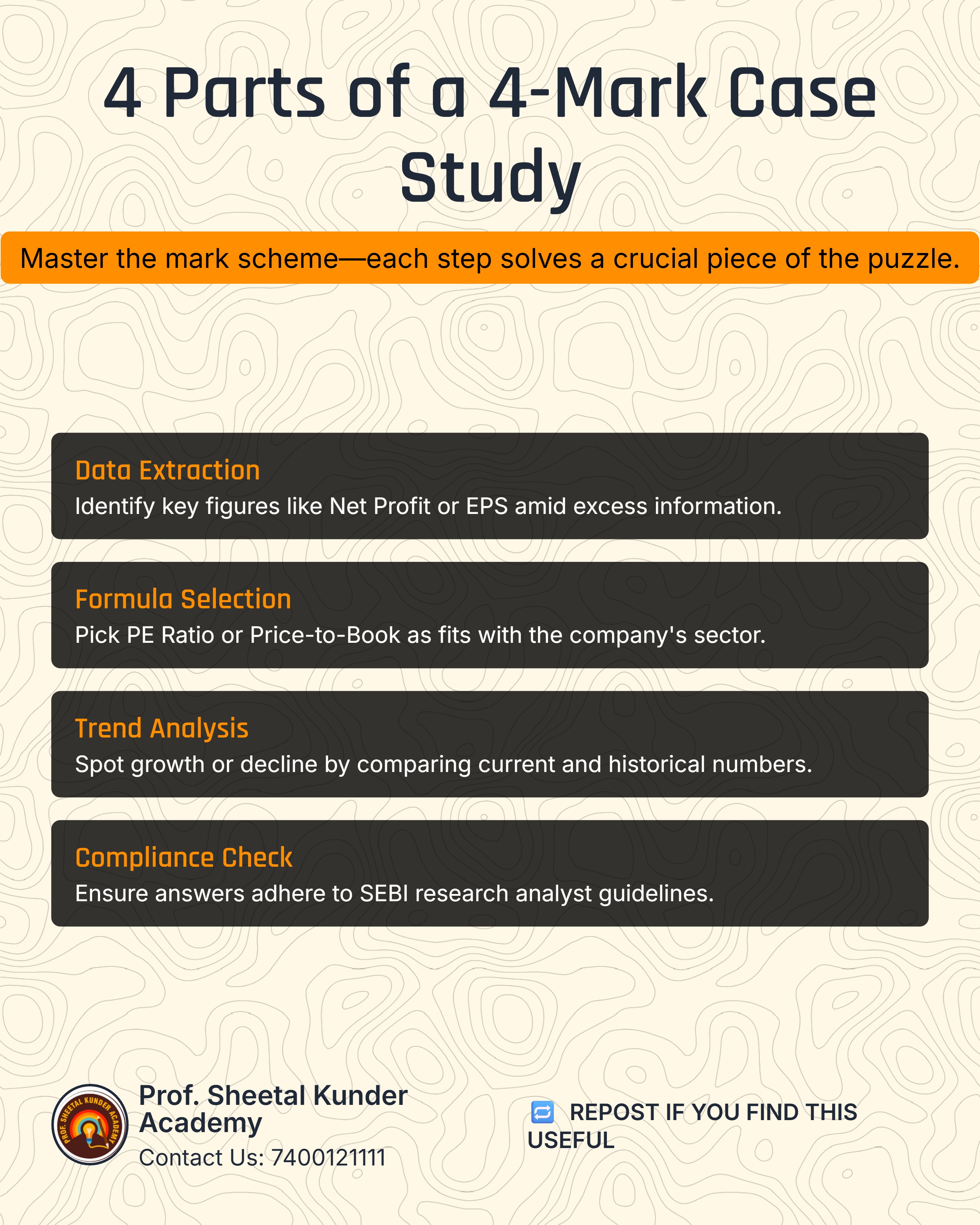
For many, the "Case Study" section - now worth a staggering 20 marks - is the biggest hurdle to achieving the 60% passing score. However, by analysing Sandip Hujare's successful strategy, we can derive five tactical lessons that turn these complex problems into scoring opportunities.


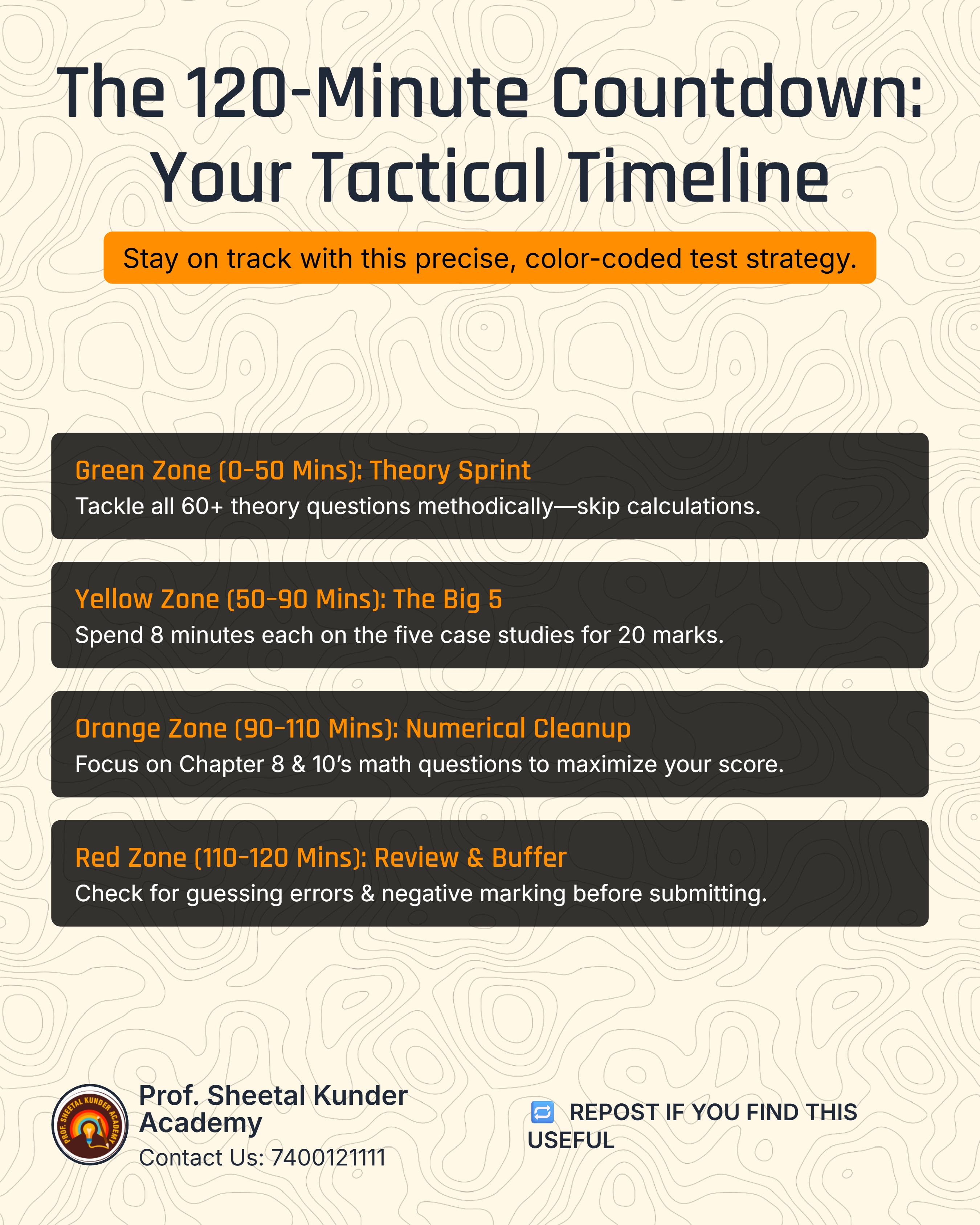
Lesson 1: The "45-Minute Theory Sprint"

The most common reason for failure in the new NISM XV pattern isn't a lack of knowledge; it's a lack of time. With 100 questions to answer, spending too long on a single complex numerical question can derail your entire paper.

  • Front-Load Success: Sandip’s primary advice is to complete all theoretical questions within the first 45-50 minutes.
  • Psychological Momentum: By clearing the "quick-win" questions first, you build the confidence needed to face the 4-mark case studies without panic.
  • Time Conservation: This "sprint" creates a massive time bank, allowing you to spend 5 to 10 minutes on each of the 5 case studies if necessary.

Lesson 2: Identifying the "High-Weightage" Chapters.
Not all chapters are created equal with respect to case studies. In the 2026 pattern, the exam centres its most complex problems around specific analytical domains.
  • The Power Trio: Focus your deep-dive preparation on Chapter 8 (Economic Analysis) and Chapter 10 (Company Analysis).
  • Bifurcated Findings: Sandip observed that the 20-mark case study block is often split across these chapters, testing your ability to connect macro-economic trends with specific company balance sheets.
  • Numerical Integration: These chapters don't just ask for definitions; they require you to perform multi-step calculations like PE Ratios, Enterprise Value (EV), and Dividend Yields within the context of a story.


Lesson 3: The "No-Skip" Policy for Technicals.
Many candidates with a technical analysis background mistakenly believe they can skip the numericals and pass on theory alone. Prof. Kunder and Sandip both warn that this is an "unaffordable" strategy.
  • The 35% Rule: The theoretical, numerical, and case study sections each account for roughly 35% of the exam. If you leave the numerical part, you are essentially trying to score 60 marks out of a remaining 65 - a near-impossible feat.
  • The "Little Bit of Knowledge" Strategy: You don't need to be a math genius. Having even a basic understanding of numerical formulas can help you secure the 5–10 "easy" math marks that bridge the gap to 60%.
  • Technical Implementation: Understand how a "Hammer" or "Uptrend" pattern looks in a word-problem format. The exam tests your ability to spot a trend in a data set (e.g., a stock moving consistently from $800 to $1000) rather than just on a chart.

Lesson 4: Reading the "Fine Print" in Case Studies.
A NISM case study is a "shame" (test of patience) as much as it is a test of knowledge. The examiners often hide vital data points in long paragraphs of text.
  • Question First, Case Second: A pro-tip is to read the 4 questions attached to a case study before reading the case itself. This allows your brain to "filter" for relevant numbers while you read the long text.
  • Look for Trend-Shifts: Pay attention to dates and price changes mentioned in the case. An analyst must determine if a price is in an uptrend, a downtrend, or a sideways movement based on the numbers provided in the scenario.
  • Beware of "Greeks": When dealing with derivatives-based cases, the paper theory is different from the practical market. You must apply parameters like Delta or Theta according to the exam workbook definitions, even if you trade differently in real life.

Lesson 5: Mock Tests as "Simulation Training"
Because the 2026 pattern is so time-sensitive, your first time seeing a 4-mark case study should not be in the exam hall.
  • Structure Over Content: Sandip emphasises that the "structure of the course" and the "mock test" were the most important parts of his success.
  • Simulation Matters: Practice with mock tests that specifically isolate Chapter 8 and 10 numericals. This builds the mental stamina required to switch from a quick theory question to a multi-step math problem.
  • The 90-Question Target: Prof. Kunder recommends attempting 90-92 questions. Since there is a passing hurdle of 60%, you must allow for a "buffer of error" in the case studies.

The Verdict: Master the Math, Conquer the Exam.
The NISM Series XV is no longer an exam you can "cram" for. It is a professional certification that demands a tactical mindset. By using the 45-minute theory sprint, mastering the core numerical chapters, and treating mock tests as high-stakes simulations, you can crack the case study code and secure your SEBI registration.

Prof. Sheetal Kunder

SEBI® Research Analyst. Registration No. INH000013800 M.Com, M.Phil, B.Ed, PGDFM, Teaching Diploma (in Accounting & Finance) from Cambridge International Examination, UK. Various NISM Certification Holders. Ex-BSE Institute Faculty. 18 years of extensive experience in Accounting & Finance. Faculty Development Programs and Management Development Programs at the PAN India level to create awareness about the emerging trends in the Indian Capital Market, and counsel hundreds of students in career choices in the finance area