NISM Exam Recovery: How Balaji D. Turned a First-Attempt Setback into a Second-Attempt Success

Thu Jan 22, 2026

Preparing for the NISM certification is often a journey of trial and error. For Balaji D., clearing the exam in his second attempt wasn't just about studying harder - it was about studying smarter and identifying the hidden traps that cost him marks the first time. In this podcast recap, Balaji shares the specific mistakes he made, the technical frictions he overcame, and the "Mam's Class" strategy that eventually led him to success.


1. The Strategy: Defeating the "Twisted Word" Trap

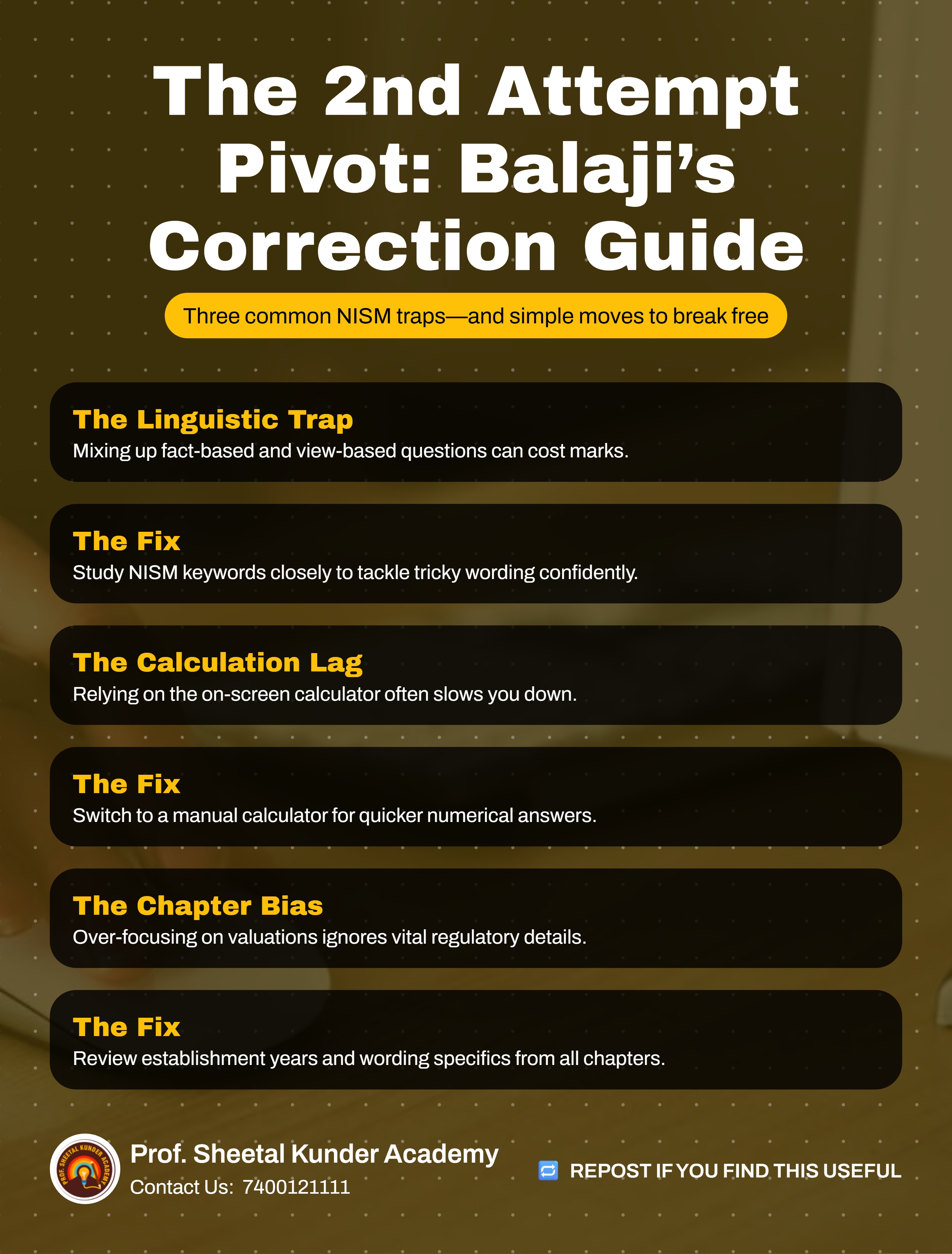
One of the most common ways to lose marks in NISM is through incorrect guessing due to subtle linguistic twists. Balaji noted that he lost 2 to 5 marks simply because of single-word differences.

  • Fact vs. View: The exam often uses "fact-based" versus "view-based" terminology to confuse candidates.
  • Unique Vocabulary: To succeed, Balaji suggests learning unique keywords that the NISM workbook frequently uses to "twist" a question's meaning.

2. Time Management: Mastering Case Studies & Regulatory Concepts

Balaji found that while complex valuations only accounted for 1 to 2 marks, the Regulatory and Ethics chapters were the real challenge.

  • The "Year" Difficulty: While many students remember regulatory numbers (like 5 or 7), the exam often asks for the specific year of establishment, which can be difficult to recall under pressure.
  • Case Study Speed: By attending specialised classes, Balaji managed to solve case studies and numericals quickly, ensuring that even below-average students could secure full marks in these sections.

3. Technical Friction: The Calculator Shift

A surprising hurdle for many is the on-screen calculator. Balaji admitted that using the digital interface slowed him down significantly.

  • Manual vs. Screen: On expert advice, he switched to a manual calculator to increase his speed and accuracy during the actual exam.

4. Reading Errors: The Difference Between "Stock" and "Cash" Balaji lost 2 to 4 marks by misreading lengthy questions.

  • Tricky Jargon: Small words like "Stock Dividend" versus "Cash Dividend" are often embedded in long paragraphs to trick the reader.
  • The Length Factor: Even if a question is long, the trick is usually hidden in one small, specific keyword.

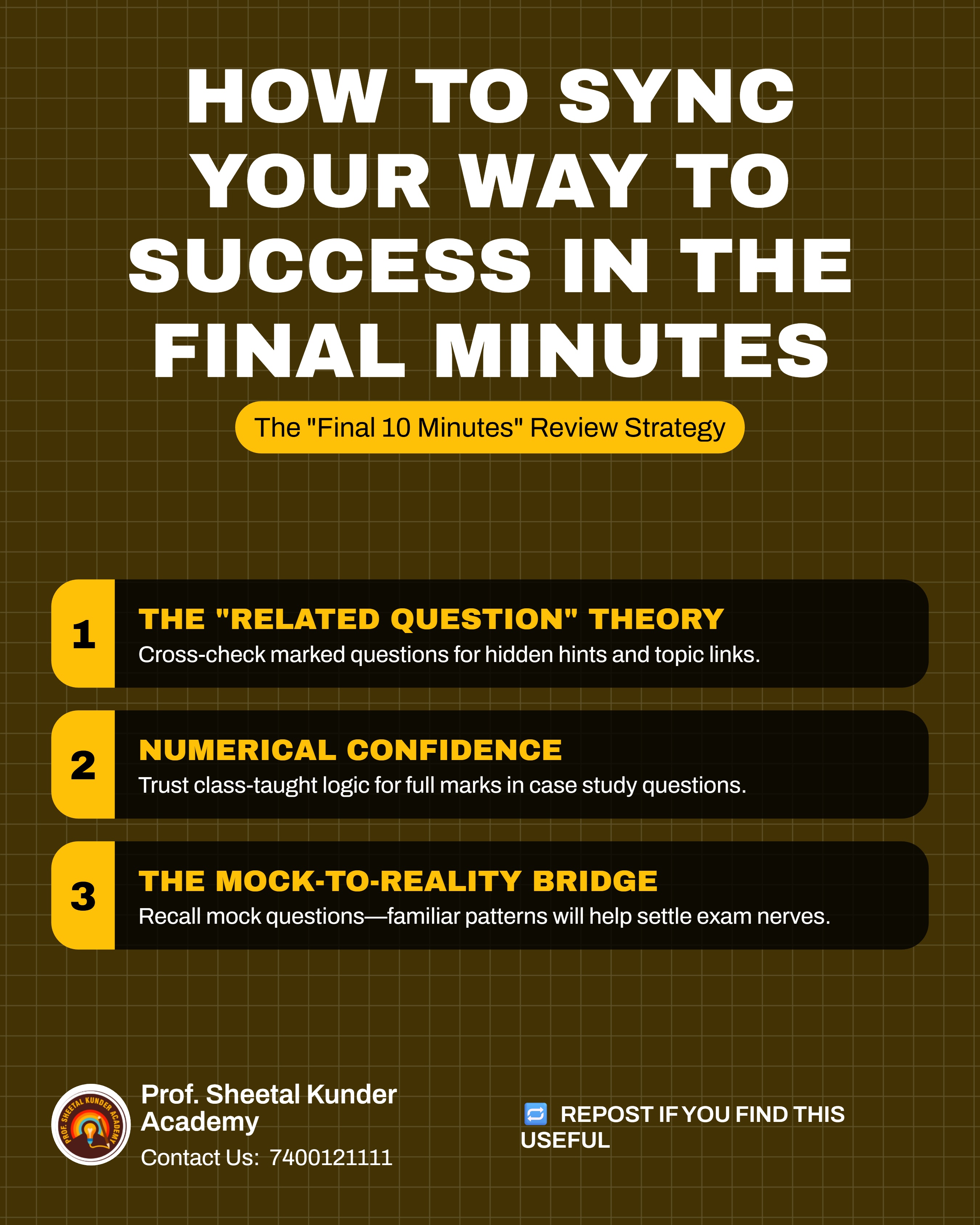
5. The Review Habit: Syncing Questions in the Final Minutes

In the final minutes of the exam, Balaji used the "Review" phase to sync answers.

  • Interconnected Questions: He realised that some questions in the paper are related to others. By reviewing unanswered questions at the end, he was able to "sink" the concepts taught in class with the options on the screen to find the correct answers.

Prof. Sheetal Kunder

SEBI® Research Analyst. Registration No. INH000013800 M.Com, M.Phil, B.Ed, PGDFM, Teaching Diploma (in Accounting & Finance) from Cambridge International Examination, UK. Various NISM Certification Holders. Ex-BSE Institute Faculty. 18 years of extensive experience in Accounting & Finance. Faculty Development Programs and Management Development Programs at the PAN India level to create awareness about the emerging trends in the Indian Capital Market, and counsel hundreds of students in career choices in the finance area