In the fast-evolving financial landscape of 2026, the question for most aspiring analysts isn't just how to get a license, but which license will carry their ambition.
As Tarun Nagpal highlighted in our recent podcast, the difference between an Individual and a Corporate Research Analyst (RA) license isn't just a legal formality - it is the difference between a high-paying job and a scalable empire. If you are a Mutual Fund Distributor (MFD), a broker, or a financial influencer, choosing the wrong path today could cap your growth at a fraction of your potential. Here is the strategic breakdown of the two paths and how the "big players" are hitting ₹40 Crore in annual turnover.
1. The Individual RA: The Specialist’s LaunchpadThe Individual RA license is designed for the solo practitioner - the "Expert" whose brand is their own name.
- Best For: Individuals starting fresh, educators, or those with a niche research focus who do not intend to hire a large team of analysts immediately.
- The Conflict of Interest Trap: As an individual, you are the researcher, the salesman, and the compliance officer. SEBI views this with caution because you cannot easily create "Arms-Length" relationships. If you are also an MFD, proving that you aren't recommending stocks just to churn brokerage or fund sales is difficult.
- The Ceiling: While profitable, your capacity is limited by your own time. You are a "one-to-many" engine, but you lack the departmental structure to handle diverse business activities simultaneously.
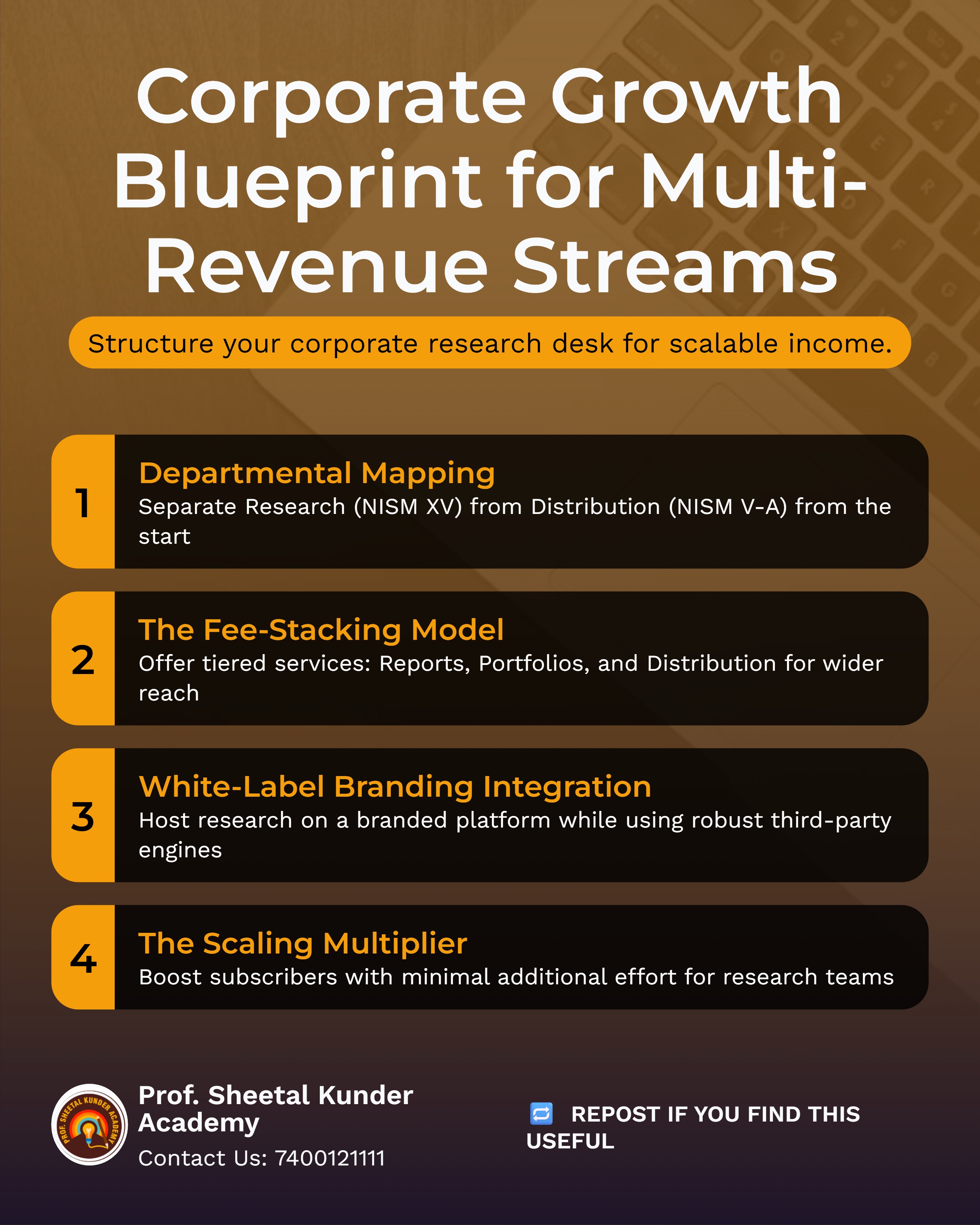
2. The Corporate RA: The Path to ₹40 Crore Revenue
If you look at the top-tier entities in India today, they almost exclusively hold Corporate RA licenses (Private Limited or LLP).
- Multi-Activity Scalability: The biggest advantage of the Corporate RA is the ability to run multiple business lines. You can have a Research Department, a Mutual Fund Distribution wing, and an Education/Training wing all under one roof.
- Departmentalisation: In a corporate structure, you don't do everything. You hire experts. This allows you to scale your "Research Reports" to thousands of clients while your "Distribution" team handles the execution.
- Institutional Trust: High-ticket HNI (High Net Worth Individual) and institutional clients often prefer to deal with a Private Limited entity. It signifies permanence, structured compliance, and a collective brain trust rather than a single point of failure.
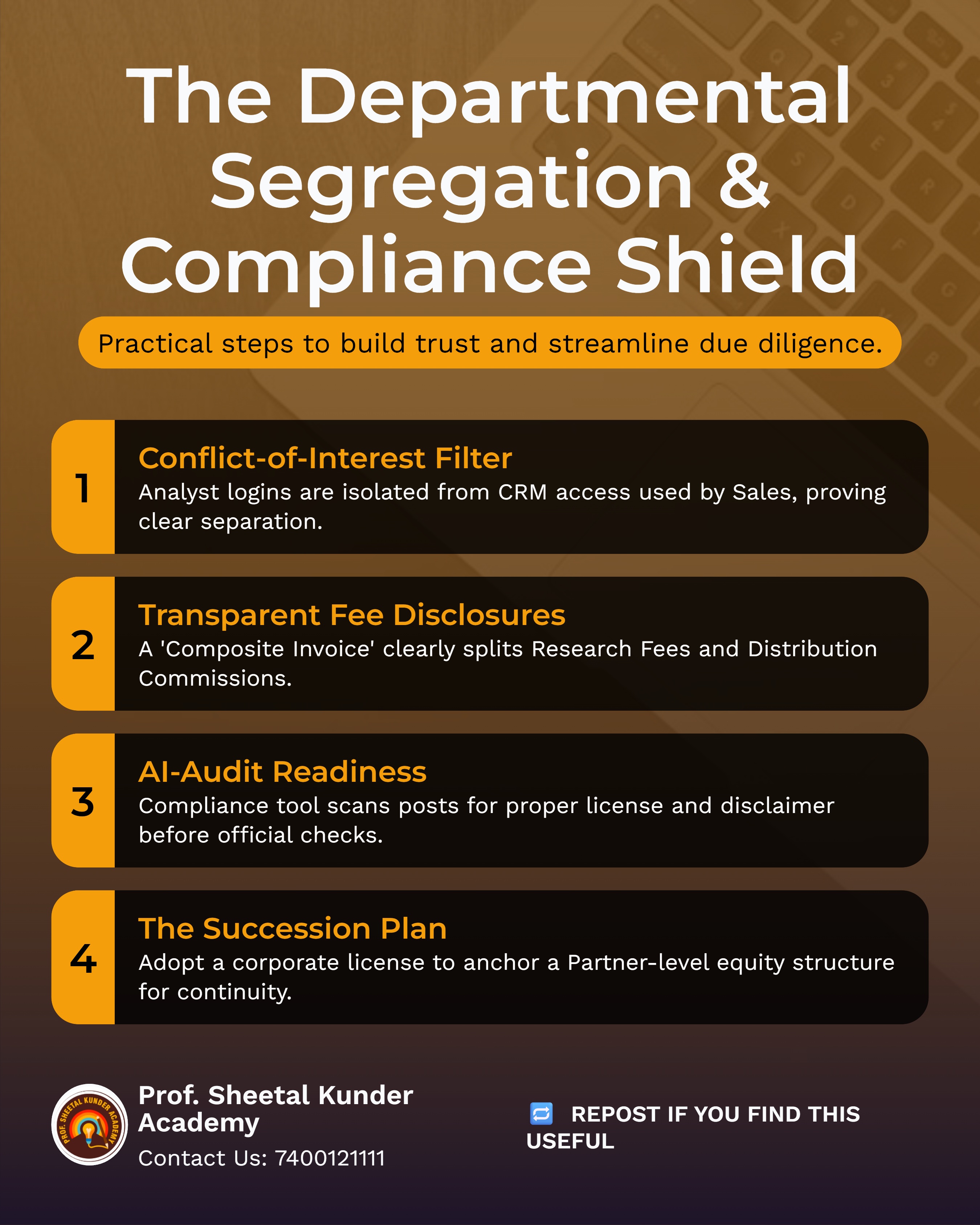
3. Understanding "Arms-Length" & Client SegregationThis is the most critical regulatory concept for 2026. If your corporate entity does more than just research, SEBI mandates Client Level Segregation.
The Rule: You must have a "Chinese Wall" between your research team and your sales/distribution team. The people writing the stock reports should not even know who the distribution clients are. This prevents the "Pump and Dump" or "Front Running" conflicts that SEBI’s Sudarshan AI is now trained to detect.
4. The "No Conversion" Reality Check
A common mistake is thinking you can "upgrade" your individual license to a corporate one later. Tarun Nagpal was very clear: Conversion does not exist. If you start as an Individual RA and decide to go Corporate later:
- You must incorporate a new company (Pvt Ltd/LLP).
- You must apply for a Fresh Corporate License.
- You must surrender your Individual License.
The Danger Zone: There is often a 3- to 4-month gap during this process, during which you may be left without a valid license to serve clients. Strategically, if you have the capital and the vision, starting as a Corporate entity from Day 1 is the smarter move to avoid this "Revenue Blackout" period.
A Blueprint for the Transitioning Professional
If you are currently an MFD or a broker looking to enter the RA space, your roadmap should look like this:
- Audit your Ambition: If you want to hit the ₹20-40 Cr revenue marks discussed in the podcast, bypass the individual license.
- Compliance Retainer: Don't try to be your own lawyer. Hire a compliance consultant to set up your "Autopilot" engine.
- The May 1st Deadline: Ensure your corporate branding and license numbers are ready for the social media transparency mandate.


 Launch your Graphy