NISM_XXV_A_Part_2 - Can You Get These 15 Client-Handling and Research Questions Right?

Tue Oct 20, 2026

A client wants confidential information. Another asks whether to exit after a market fall. A research report is ready, but an important certification is missing.

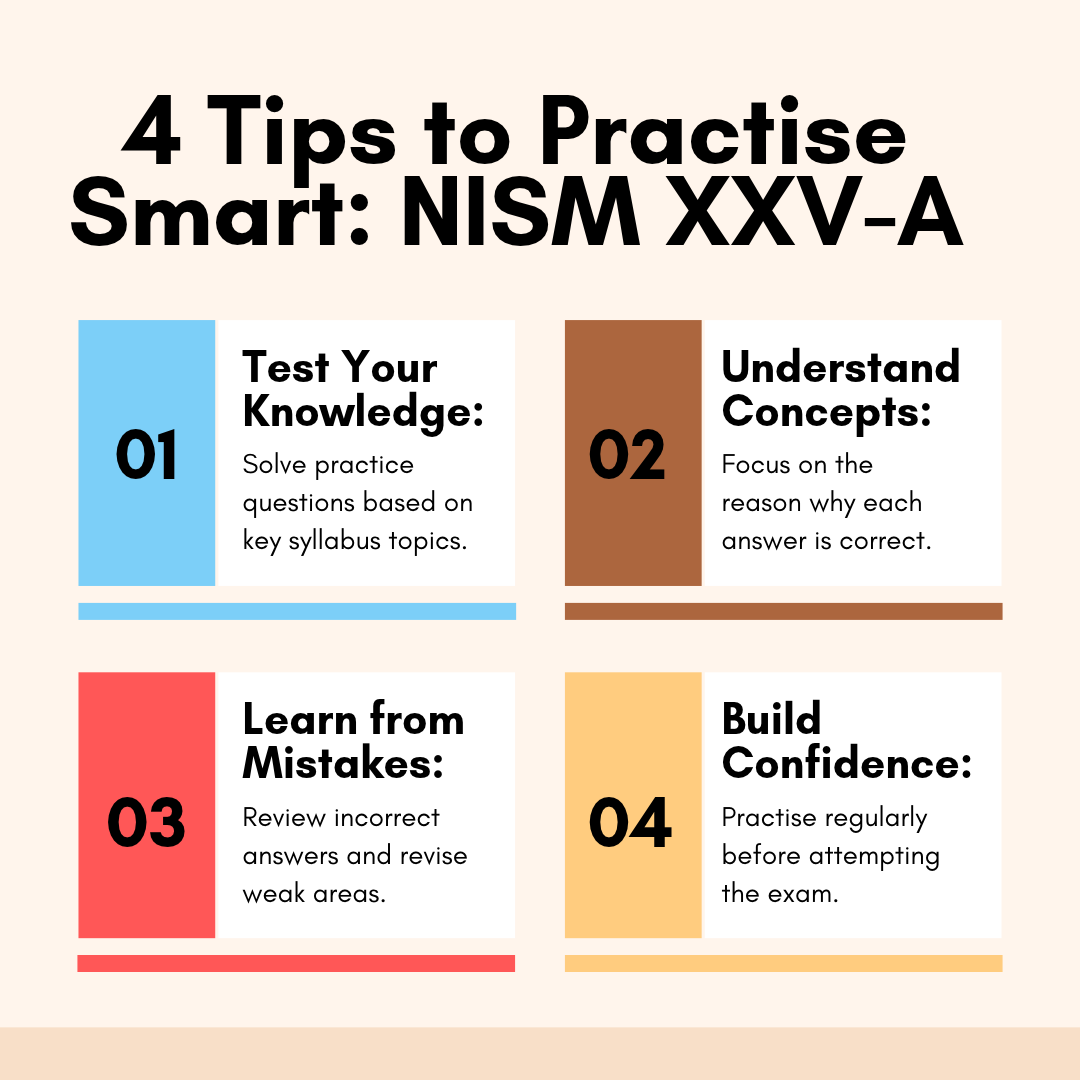
NISM XXV-A preparation involves recognising the appropriate response to situations like these—not simply memorising definitions.

Continuing from the first 10 questions in Part 1, this blog covers all 15 questions discussed in Part 2, from Question 11 to Question 25.
Prof. Sheetal Kunder Academy
Preparing for a NISM exam?
Share your details and the PSKA team will get back to you.
By submitting, you agree to be contacted by the PSKA team.


Q11. What Does Crisis Management Mean for PARS?

  • A. Changing ratings.
  • B. Avoiding clients.
  • C. Handling urgent client concerns calmly and factually.
  • D. All the given options.

Correct answer: C


Address concerns professionally using factual information. Avoiding clients or changing ratings does not define crisis management.

Q12. What Are the Key Competencies of PARS?

  • A. Digital proficiency.
  • B. Continuous learning.
  • C. Data discipline.
  • D. All the given options.

Correct answer: D

The video highlights technology skills, ongoing learning and careful data handling as relevant competencies.

Q13. Which Activity Is Appropriate During Client Interaction?

  • A. Explaining an analyst’s published research without adding new opinions.
  • B. Providing specific target prices and return expectations independently.
  • C. Advising clients on portfolio construction and investment decisions.
  • D. Making short-term predictions about security prices.

Correct answer: A

Explain the published research clearly without introducing independent recommendations.

Q14. What Does Effective Client Communication Require?

  • A. Emotional influence.
  • B. Aggressive persuasion.
  • C. Complex language.
  • D. Clarity and accuracy.

Correct answer: D


Click Here to Enroll to into NISM XXV-A Program

Simplify technical information while preserving its meaning. Persuasion and emotional influence are not the objective.

Q15. What Should PARS Do When a Client Requests Unpublished or Sensitive Data?

  • A. Neglect information already publicly available.
  • B. Independently meet the client for clarification.
  • C. Stay within compliance boundaries.
  • D. None of the given options.

Correct answer: C

A private conversation does not change whether sensitive information can appropriately be shared.

Q16. What Is the Best Way to Close a Difficult Client Conversation?

  • A. With emotional comments.
  • B. With personal advice.
  • C. With a clear, factual summary.
  • D. None of the given options.

Correct answer: C

Summarise the relevant facts without introducing personal advice or emotional remarks.

Q17. Which Statement Applies to PARS Working in Sales?

  • A. Must comment on clients’ investment choices.
  • B. Cannot collect KYC documents or process client onboarding.
  • C. Must comment on client suitability and risk profiles.
  • D. Must not redirect clients to an unauthorised KYC registration agency for onboarding.

Answer selected in the video: B

The speaker distinguishes research communication from independently handling onboarding.

Transcript clarification: Option D says “unauthorised,” but the explanation discusses redirecting clients to authorised channels. This inconsistency prevents treating B as an unambiguous answer without checking the original question.

Q18. Which Practice Is Appropriate for Handling Confidential and Unpublished Information?

  • A. Treating digital chats as informal because no public disclosure occurs.
  • B. Using authorised, encrypted communication channels and restricting draft access.
  • C. Sharing internal research drafts within closed social media groups.
  • D. Keeping sensitive files on personal devices with regularly updated passwords.

Correct answer: B

The video favours approved systems and restricted access over informal sharing.

Q19. What Should Priya Do If a Client Research Document Lacks Analyst Certification?

  • A. Remove or conceal the missing certification section to avoid delay.
  • B. Send the document and share certification separately if required.
  • C. Circulate it now and add certification later.
  • D. Stop circulation and include certification before sending.

Correct answer: D

Address the missing certification before distributing the document.

Q20. A Client Asks, “The Market Fell 5%. Should I Exit My Fund?” What Should PARS Do?

  • A. Predict upcoming market movements.
  • B. Explain volatility using the analyst’s published note and clarify the limits on providing exit advice.
  • C. Recommend remaining invested for at least one year regardless of conditions.
  • D. Recommend exiting immediately.

Correct answer: B

Explain existing research rather than introducing a personal investment decision.

Q21. What Must Research Entities Avoid?

  • A. Fact-based analysis.
  • B. Proper citations.
  • C. Compliance checks.
  • D. Conflicts of interest.

Correct answer: D

Read “avoid” carefully; the other options describe constructive practices.

Q22. Which Statement Best Fits a Research Report’s Conclusion?

  • A. Earnings growth is expected, supported by margin expansion and improved demand.
  • B. This stock will double soon because of strong sentiment.
  • C. The recommendation is based on optimism.
  • D. The company will outperform all peers regardless of market conditions.

Correct answer: A

It supports the conclusion with reasons rather than certainty or optimism alone.

Q23. Which Conduct Principles Should PARS Follow?

  • A. Prohibit insider trading.
  • B. Adhere to proper procedures.
  • C. Indulge in front running.

Correct answer: Only A and B

Click Here to Enroll to into NISM XXV-A Program

The video rejects front running.

Q24. Which Is a Quality of a Good Research Report?

  • A. It guarantees returns.
  • B. It presents balanced views with risks.
  • C. It promotes stocks.

Correct answer: B

Research should explain risks, not simply promote an investment.

Q25. How Should PARS Interact With Clients?

  • A. In an advisory manner.
  • B. Based on personal opinions.
  • C. Predictively.
  • D. Factually and neutrally.

Correct answer: D

Keep explanations aligned with the research.


Prof. Sheetal Kunder
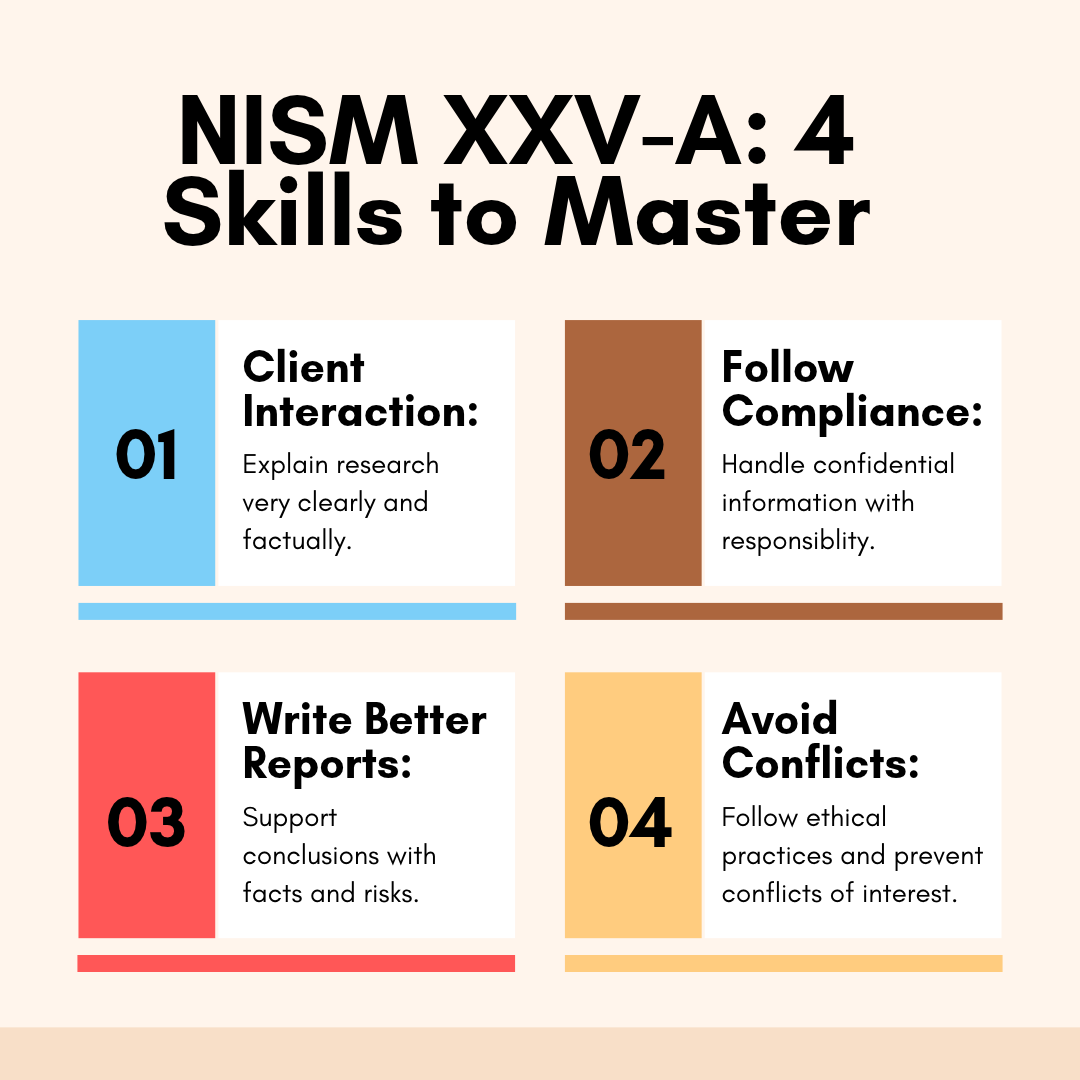
SEBI® Research Analyst. Registration No. INH000013800 M.Com, M.Phil, B.Ed, PGDFM, Teaching Diploma (in Accounting & Finance) from Cambridge International Examination, UK. Various NISM Certification Holders. Ex-BSE Institute Faculty. 18 years of extensive experience in Accounting & Finance. Faculty Development Programs and Management Development Programs at the PAN India level to create awareness about the emerging trends in the Indian Capital Market, and counsel hundreds of students in career choices in the finance area

FAQs

How many questions do both parts cover?

Part 1 covers 10; Part 2 adds 15, making 25.

Where does the speaker say these questions originated?

The speaker attributes them to NISM’s practice test.

What should students do when wording is confusing?

The speaker recommends rereading the question two or three times before reconsidering its options.