There are no items in your cart
Add More
Add More
| Item Details | Price | ||
|---|---|---|---|

Sat Aug 15, 2026
Newly registered advisers are often surprised by how much freedom exists after investment advisor registration SEBI requirements are cleared. The certification and registration process stays the same either way, but what gets built with them afterward can look completely different depending on personality and priorities.
Some advisers dream of running their own practice from day one, setting their own hours, choosing their own clients, and building something entirely their own. Others feel far more comfortable starting inside an established firm, learning from people who've already built successful practices, and growing steadily from there.
Neither choice is more serious or more correct than the other. They are simply two different, equally valid ways of building a meaningful career in financial advisory.

Going independent means building a brand, a client base, and a set of systems entirely from scratch.
A typical independent journey involves:
The appeal here is real ownership. Every client relationship, every rupee earned, and every decision about how the practice runs stays entirely in one's own hands.
It also means every challenge lands on the same desk too. Slow months, difficult clients, and administrative work all become personal responsibility rather than someone else's problem.
Picturing a normal week helps make independent practice feel concrete rather than abstract.
A typical week might include:
This rhythm brings complete control over the calendar. Some weeks feel light and flexible. Others feel packed, especially as the client base grows while everything is still being handled solo.
Many independent advisers describe the first year as the busiest, simply because multiple skills, advice, sales, and operations, are being learned all at once, with no one else to lean on for the last two.
Joining an established SEBI-registered advisory firm offers a very different, equally valuable experience.
A typical path inside a firm includes:
This path offers a gentler entry into client-facing work. Support systems are already in place, which means less time gets spent reinventing processes and more time practicing the actual craft of advising.
A typical week within a firm looks noticeably different from solo practice.
Time often goes toward:
This structure removes a lot of the uncertainty that comes with independent practice. For some advisers, something like the Fydaa Young Investment Advisor Entrepreneurship Program simply offers a middle ground, letting them work inside a live advisory setup while they slowly build their own entrepreneurial muscles.
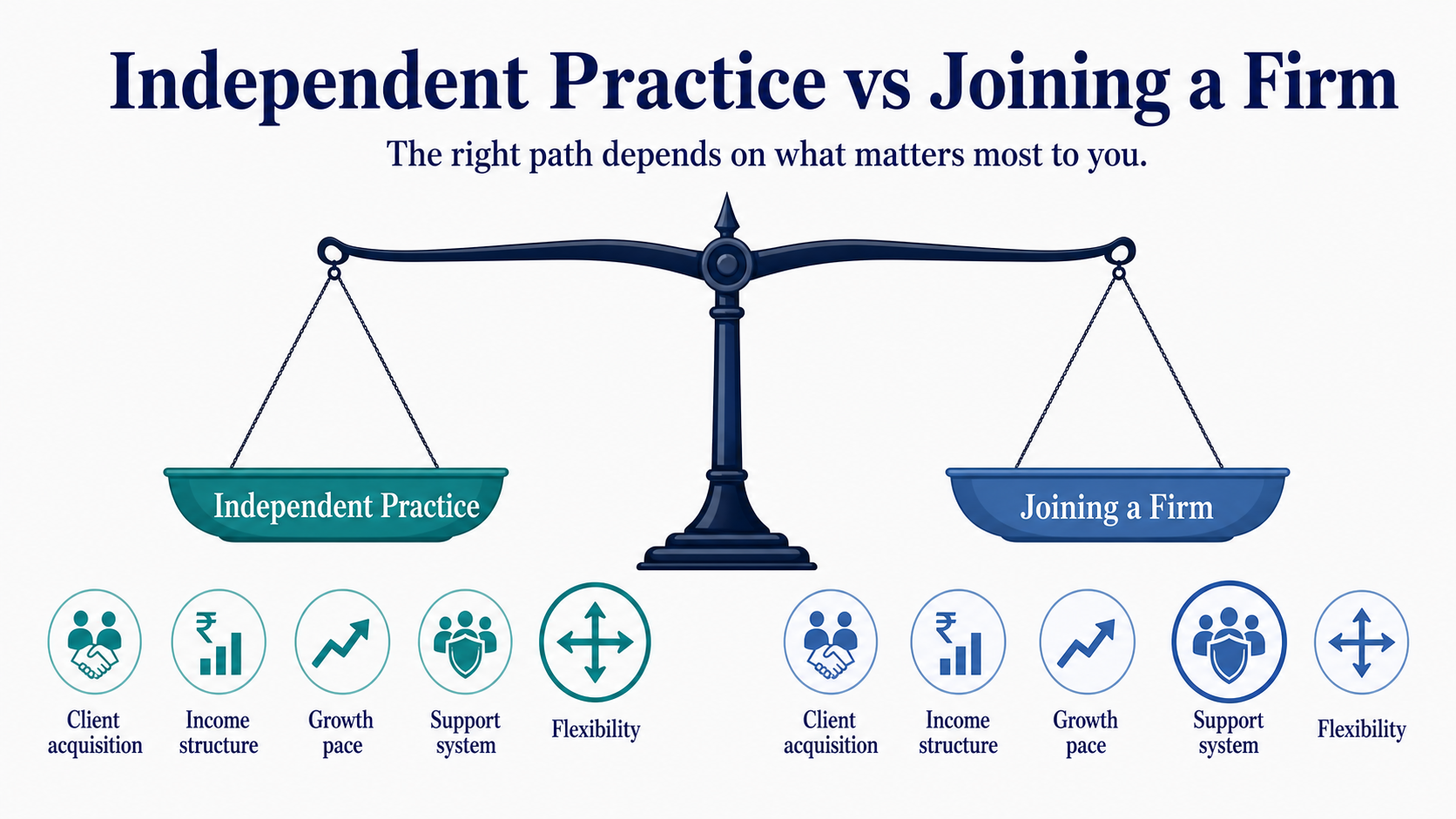
Laying both options next to each other makes the trade-offs easier to see clearly.
Both paths can lead to a genuinely successful, fulfilling career. The right choice really comes down to how much structure versus freedom feels energizing on a personal level.
Earnings comparisons between these two paths naturally come up, and the honest answer is that both can be very rewarding, just on different timelines.
Independent advisers often see slower income in the first year or two, since building a client base from scratch simply takes time.
Once established though, independent advisers keep the full value of every fee charged. Income potential grows directly with the size and quality of client relationships, with no ceiling imposed by a firm's structure.
Advisers who join a firm typically see steadier income sooner, often working with clients from day one rather than building a pipeline alone.
Over time, many advisers within firms also negotiate a growing share of the value they bring in. Some eventually transition to running their own book within the firm's structure, or branch out independently once enough experience and confidence has been built.
Mentorship shapes the early years of any adviser's career significantly, and it looks quite different depending on the path chosen.
Independent advisers often need to actively seek out mentors, through:
More effort goes into finding the right mentor this way, but the guidance received tends to be highly personalized once a good fit is found.
Advisers within a firm usually have mentorship built into daily work. Senior colleagues are right there to answer questions, review client conversations, and help navigate tricky situations as they come up, meaningfully shortening the learning curve during those crucial first months.
Regardless of the path chosen, the tools used shape how smoothly a practice runs.
Independent advisers usually need to set up:
Advisers within a firm typically inherit these systems already in place, saving setup time but offering less flexibility for personal customization.
Neither approach is inherently better. Independent advisers gain flexibility at the cost of setup time. Firm-based advisers gain speed at the cost of some customization. Knowing this trade-off in advance helps in planning the first few months more realistically.

A few traits tend to predict genuine enjoyment and success in an independent practice.
Independent practice tends to suit those who:
When most of these feel true, independent practice tends to energize rather than exhaust.
Equally, plenty of traits point toward a genuinely fulfilling career inside an established practice.
Working within a firm tends to suit those who:
When this list resonates more strongly, joining a firm tends to offer a stronger, steadier foundation to grow from.
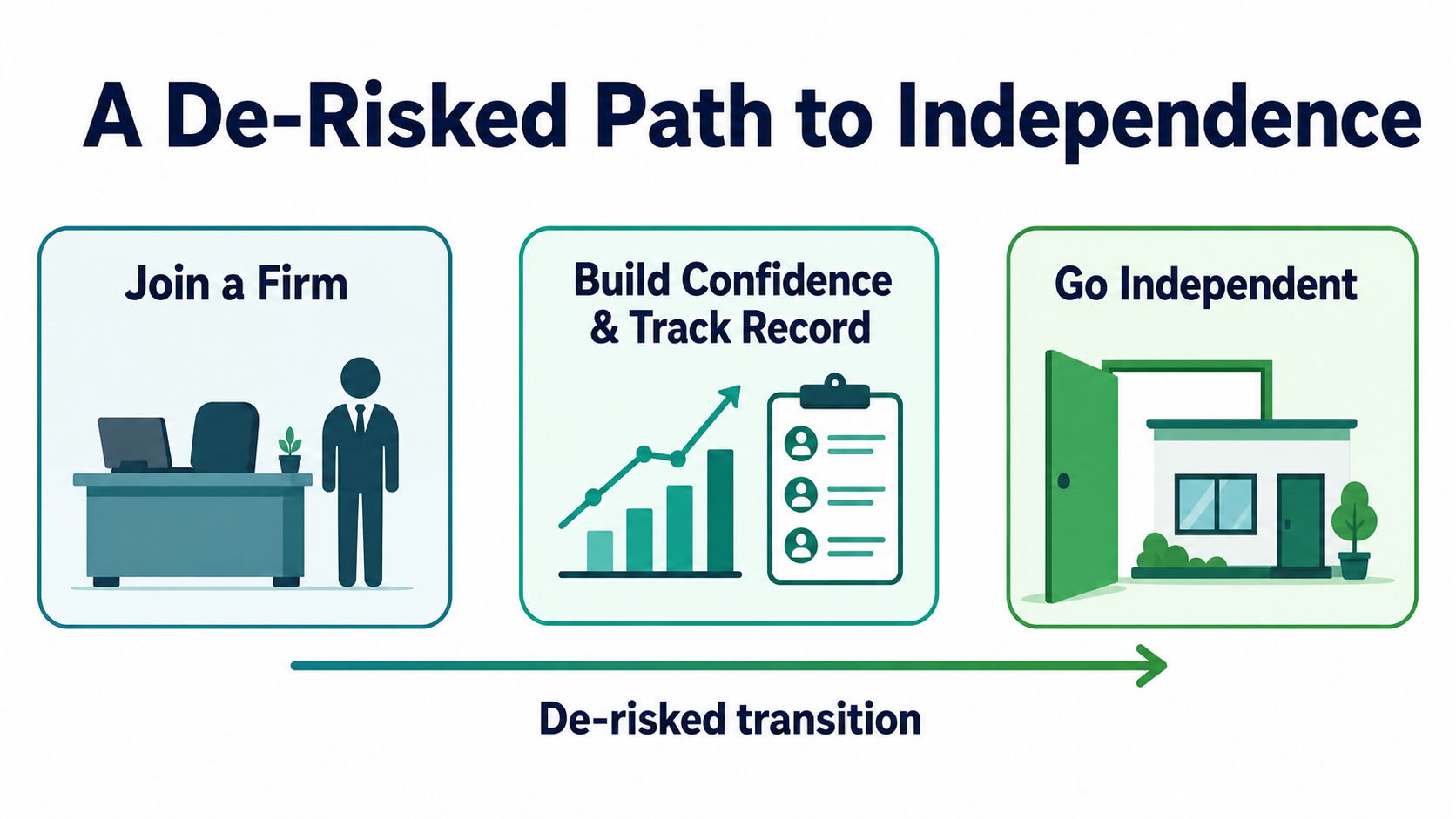
A growing number of advisers don't treat this as a permanent, either-or decision.
Many start within a structured program or firm, build genuine confidence and a track record over a few years, and then transition into independent practice once ready.
This hybrid approach offers real advantages:
It's a genuinely smart way to de-risk the early, most uncertain years of an advisory career, while still keeping the door open to full independence down the line.
Sitting with a few honest questions, rather than rushing toward whichever option feels more familiar right now, tends to lead to a better decision.
Worth reflecting on:
There are no wrong answers here. These questions simply help surface what's already known internally, even if it hasn't been put into words yet.
Whichever path feels appealing right now, this decision doesn't need to be permanent or perfect.
Careers in financial advisory tend to evolve naturally with experience and clarity about what genuinely feels energizing. Many successful advisers switch paths at least once, and it rarely feels like a step backward when they do.
A few reminders worth holding onto:
Investment advisor registration SEBI style opens the same door for everyone, but what gets built behind that door is entirely a personal choice.
Whether that means the full ownership of an independent practice, the steady support of joining an established firm, or a thoughtful hybrid of both, every path leads into a career built on genuine trust and meaningful client relationships.
Reflecting on what feels energizing, and trusting that either path chosen thoughtfully can lead to a truly rewarding future in financial advisory, makes this decision far less daunting than it first appears.

Prof Sheetal Kunder
SEBI® Research Analyst. Registration No. INH000013800 M.Com, M.Phil, B.Ed, PGDFM, Teaching Diploma (in Accounting & Finance) from Cambridge International Examination, UK. Various NISM Certification Holders. Ex-BSE Institute Faculty. 18 years of extensive experience in Accounting & Finance. Faculty Development Programs and Management Development Programs at the PAN India level to create awareness about the emerging trends in the Indian Capital Market, and counsel hundreds of students in career choices in the finance area
1. After investment advisor registration SEBI style, can I choose between working independently or joining a firm?
Yes, your registration itself doesn't restrict this choice, and many advisers move between the two models over the course of their careers.
2. Which path offers faster income, independent practice or joining a firm?
Joining a firm often provides steadier income sooner, since you're typically working with clients from early on, while independent practice usually takes longer to build momentum.
3. Is mentorship available if I choose to practice independently?
Yes, though you'll need to seek it out through professional networks, communities, or structured programs, rather than having it built into daily work automatically.
4. Can I start within a firm and go independent later?
Absolutely, and many advisers follow exactly this hybrid path, building confidence and experience within a firm before eventually branching out on their own.
5. What kind of personality tends to thrive in independent practice?
People who enjoy variety, don't mind handling business tasks alongside advice, and are comfortable with some income unpredictability in the early years.
6. What kind of personality tends to thrive within an established firm?
People who prefer focusing purely on client relationships, value nearby mentorship, and appreciate working within established systems and processes.
7. Does a structured training program help with this decision?
Yes, programs that combine mentorship with entrepreneurial training help you build skills useful in either path, making your eventual choice feel more informed and confident.
8. Is one path considered more prestigious or serious than the other?
No, both independent practice and joining a firm are equally respected paths within the profession, and the right choice depends entirely on personal fit, not prestige.
 Launch your Graphy