The landscape for aspiring Research Analysts in India underwent a seismic shift in early 2026. In line with SEBI’s mandate that all associated persons and individual research analysts must hold a valid NISM Series XV certification, the examination has been fundamentally restructured. As discussed by Prof. Sheetal Kunder and Sandip Hujare, the January 2026 workbook update isn't just a minor refresh; it’s a complete overhaul of how technical knowledge, numerical accuracy, and analytical case studies are tested.
For many candidates, this new pattern has introduced a "very big burden," especially for those balancing professional commitments
. However, as Sandip Hujare - one of the first to clear the new pattern - proves, with the right tactical approach, this "difficult" exam is entirely conquerable
.
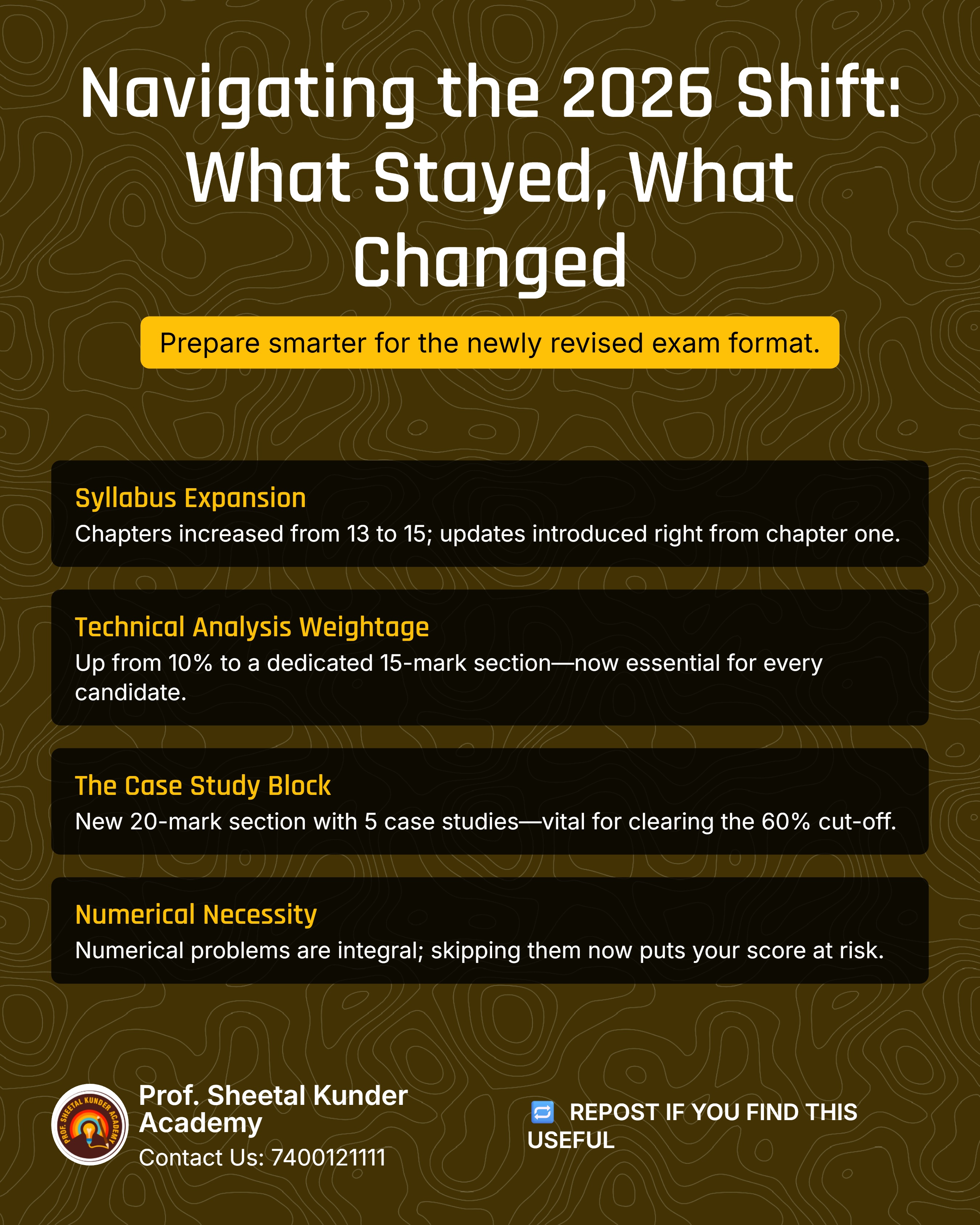
1. Understanding the Structural Shifts: From 13 to 15 ChaptersThe most immediate change in the 2026 pattern is the expansion of the syllabus. The previous curriculum, which many students were accustomed to, has been retired in favour of a 15-chapter deep dive that emphasises practical application over rote memorisation.
The Technical Analysis Takeover. In the old pattern, Technical Analysis was often treated as a peripheral topic with roughly 10% weightage
. In the 2026 version, this has changed dramatically.
- Weightage Increase: Technical Analysis now commands a solid 15 marks in the exam.
- Practical Implementation: The exam no longer just asks you to identify a "hammer" or "candlestick" pattern. It now tests how these patterns are implemented from an "exam point of view" through case studies.
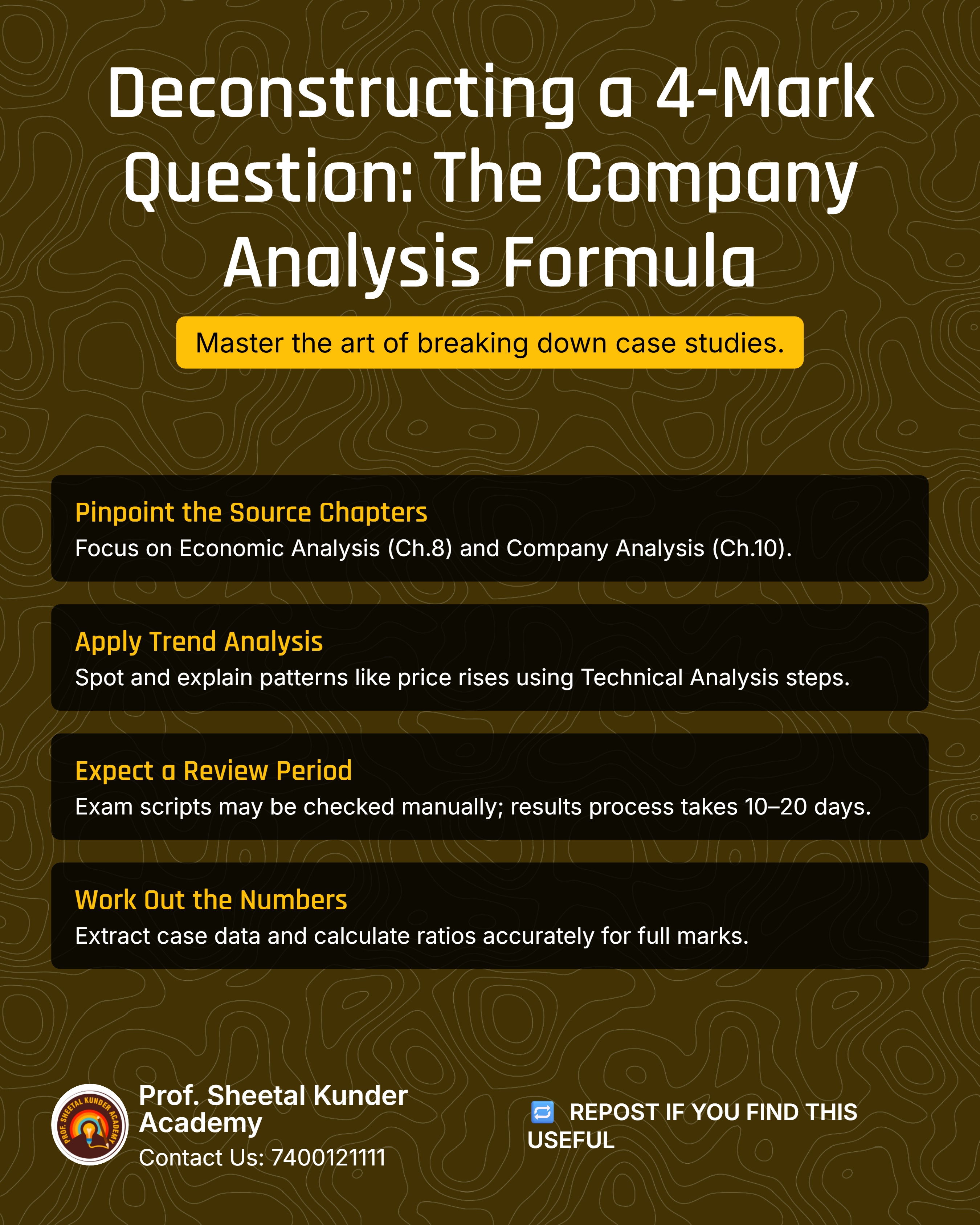
- Trend Identification: You are now expected to analyse price movements (e.g., a stock moving from $800 to $1000) and determine whether they represent an uptrend, downtrend, or sideways movement in a practical scenario.
2. The "Case Study" Revolution: 20 Marks of Critical ThinkingIf there is one section that candidates fear most in the 2026 pattern, it is the Case Studies. Prof. Kunder highlights that the marks and volume of these studies have increased significantly.
- The 20-Mark Block: There are now 5 distinct case studies, each carrying 4 marks, totalling 20 marks for the entire section.
- Integration with Core Chapters: These studies aren't isolated. They are deeply integrated into Chapter 8 (Economic Analysis) and Chapter 10 (Company Analysis).
- No More "Skipping": In the past, some students would skip case studies to focus on theory. Prof. Kunder warns that this is "not affordable" in 2026. With a 60% passing mark, losing 20 marks at the outset puts your success at severe risk.
3. Balancing Theory, Numericals, and Case Studies. The 2026 exam is well-balanced to assess diverse skill sets. Sandip Hujare notes that the bifurcation is roughly 35-35% for theory and numericals, with the remaining weightage going to case studies.
The Tactical Breakdown:
- Theory (The Foundation): While the exam is more technical, theory remains the backbone. However, the theoretical questions are now "in-depth" and require a conceptual understanding rather than just memorising definitions.
- Numericals (The Score Booster): Many people with technical backgrounds try to avoid math. This is a mistake. Sandip suggests that even a "little bit of knowledge" in numericals can help you clear the hurdle. You cannot afford to leave the numerical part blank.
- Technical Perspective: The exam bridges the gap between paper-based theory and practical market knowledge. You must be able to apply practical knowledge to paper-based Greeks and derivative parameters.
4. The "45-Minute" Time Management Hack. With 100 questions and a mix of complex numericals and long case studies, time management is the silent killer in the NISM Series XV exam
.
- Front-Load the Theory: Sandip Hujare shares a vital trick: solve all theoretical questions in the first 45 to 50 minutes.
- Save Time for Complexity: By clearing the "quick answers" early, you mentally prepare to handle the 4-mark case studies and numericals without fear of the clock running out.
- Reading Speed: Case studies require extensive reading. If you have front-loaded your time, you can afford to read the case 2–3 times to ensure you don't miss a vital data point.
5. Study Materials: Beyond the PDF One of the biggest complaints from 2026 candidates is the lack of updated study materials. Prof. Kunder and Sandip emphasise that relying on old YouTube videos or outdated workbooks will lead to failure.
- Structured Courses: Use a program that offers chapter-wise videos and specific mock tests for the new pattern.
- Updated PDFs & One-Liners: High-quality PDFs and "one-liners" are essential for the technical and commodities sections.
- The Power of Mock Tests: Practice specifically for the case study and numerical blocks. Sandip credits his success to following the structured mock tests provided in his course.
The Verdict: The Path to SEBI RegistrationClearing the NISM Series XV is the first and most critical step toward becoming a SEBI Registered Research Analyst. While the 2026 pattern is undoubtedly more difficult, it creates a "higher bar" that ensures only truly competent analysts enter the regulated field. As Sandip Hujare summarizes, it isn't just about clearing an exam; it's about building the technical foundation for a full-time career in finance.


 Launch your Graphy